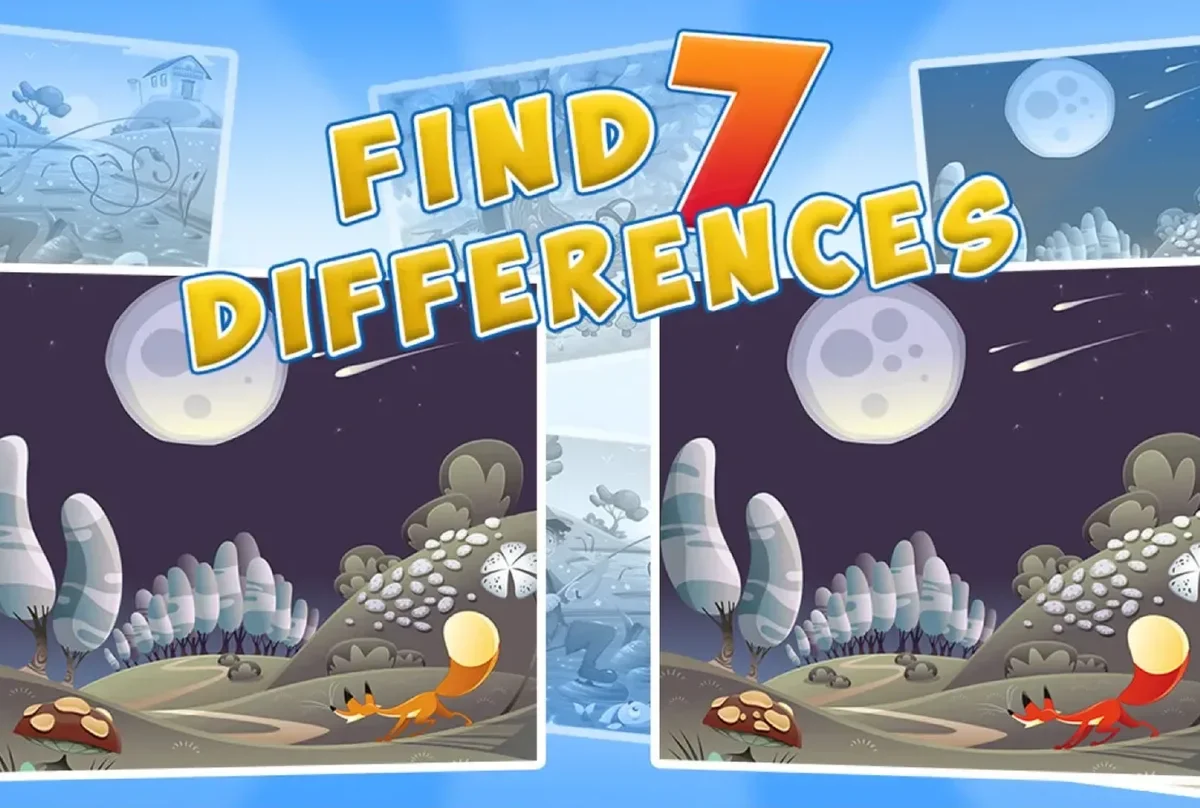
A spot the difference game shows you the same picture twice — almost. Between the two versions a handful of details have been quietly changed, and your job is to find every one. Some players meet the genre as “find the difference” or “search the difference”; the names all describe the same puzzle, one of the oldest and most approachable in the observation family. This guide covers how the games work, the kinds of changes designers actually hide, and the habits that find them faster.
How a Spot the Difference Game Works
Two near-identical images sit side by side, or one above the other on a phone screen. Somewhere between them hide a fixed number of differences — five, seven and ten are the common counts, and the game usually tells you the total up front. Spot a change, click or tap it in either picture, and the game circles it and ticks it off the counter. Find them all and the round is complete. Wrong clicks are either ignored, gently penalised, or — in timed variants — cost a few seconds, which is the genre’s entire threat level.
An Old Puzzle in a New Window
The puzzle is far older than the browser. Paired-picture puzzles have run for decades in newspapers, children’s magazines and activity books, precisely because they need no rules explanation and no language: the instruction fits in its own title. The digital version keeps that universality and adds the conveniences print could not offer — instant feedback on every click, a counter that cannot be argued with, and an endless supply of scenes. It sits inside the wider family of observation games; if picture-searching in general appeals to you, our hidden object guide maps the whole genre.
What the Designers Actually Change
Knowing the categories of change turns a vague stare into a checklist. Nearly every difference falls into one of these:
- Something removed or added. A bird gone from a branch, an extra flower in the vase. The most common class, and the easiest to miss in clutter.
- A colour shift. A red scarf turned green, a curtain a shade darker. Bold swaps are gifts; subtle ones hide in shadows and patterns.
- A size or count change. A window slightly taller, four buttons where there were five, a longer cat’s tail.
- A flip or rotation. A clock’s hands moved, a sign mirrored, a picture frame tilted the other way.
- A pattern edit. Stripes rearranged, a logo simplified, one tile in a floor swapped — the class that survives longest against a tired eye.
How to Find Differences Faster
Speed in this genre is method, not eyesight:
- Sweep on a grid. Divide the picture mentally into strips and compare strip by strip, the same way you would read a page. Random darting rechecks the same spots and skips others entirely.
- Compare landmarks, then neighbourhoods. Check the big objects first — they anchor your mental map — then work the busy regions around them where small edits hide.
- Flick your eyes between twins. Look at the same spot in both pictures in quick alternation; a change often registers as a flicker before you can name it.
- Name what you see. Saying “three red cups” to yourself makes the fourth cup in the other picture jump out.
- Save the pattern zones for last. Wallpaper, foliage and brickwork punish tired eyes; sweep them when everything obvious is banked.
The habits transfer directly from the wider search genre — the sweep, the naming trick and the rest-your-eyes rule from our adult hidden object picks apply here unchanged.
Timers, Lives and Other Variants
The base puzzle is untimed and unpunishing, and many titles keep it that way. Variants layer pressure on top: a countdown per scene, a limited stock of wrong clicks, hint buttons that recharge slowly, or a difficulty curve that shrinks the differences as levels climb. Seasonal editions re-skin the scenes for holidays without touching the rules. None of the variants change the core skill — systematic comparison — they only change how forgiving the game is while you exercise it.
Play Spot the Difference Online
The spot the difference collection here runs free in the browser. Find Seven Differences is the classic count in clean cartoon scenes, Funny Differences leans comic, and Spot the Difference Animals gives the format to its most forgiving subject, since you already know what an unedited cat looks like.
Ready for the deep end? Our toughest comparison games shows what scale, gloom and photo texture do to this puzzle.
Frequently Asked Questions
What do you do in a spot the difference game?
Compare two nearly identical pictures and click every detail that differs between them — objects added or removed, colours shifted, sizes changed — until the stated count of differences is found.
How many differences do these games usually hide?
Five, seven or ten per scene are the common counts, and the game normally shows the total up front along with how many you have found so far.
Is spot the difference the same as find the difference?
Yes — spot the difference, find the difference and search the difference are different names for the same paired-picture puzzle, and stores and sites use them interchangeably.
Can I play spot the difference games free online?
Yes. The titles in the collection here run free in the browser with nothing to set up, including seasonal and animal-themed scenes.