Most spot the difference scenes are gentle: bright cartoon rooms, bold changes, a forgiving pace. But the genre has a harder edge, and the difficulty never comes from reflexes — it comes from pictures that give your eyes less to hold onto. This page picks out the toughest comparison games in our collection and, more usefully, explains what makes a pair of pictures genuinely hard, so you know exactly which kind of struggle you are signing up for.
What Actually Makes a Difference Hard to Spot
Four picture properties do nearly all the work. Scale — the wider the scene, the smaller each change sits inside it. Low light — shadow flattens colour, and a colour-shift difference can vanish entirely into dusk. Photographic texture — drawings have clean outlines, photographs have gradients, and a real-world image hides its seams far better than a cartoon. Fine detail — the more legitimate small objects a scene holds, the less any single small oddity stands out. The hardest games in the genre are simply the ones that stack several of these at once.
Our Toughest Comparison Games
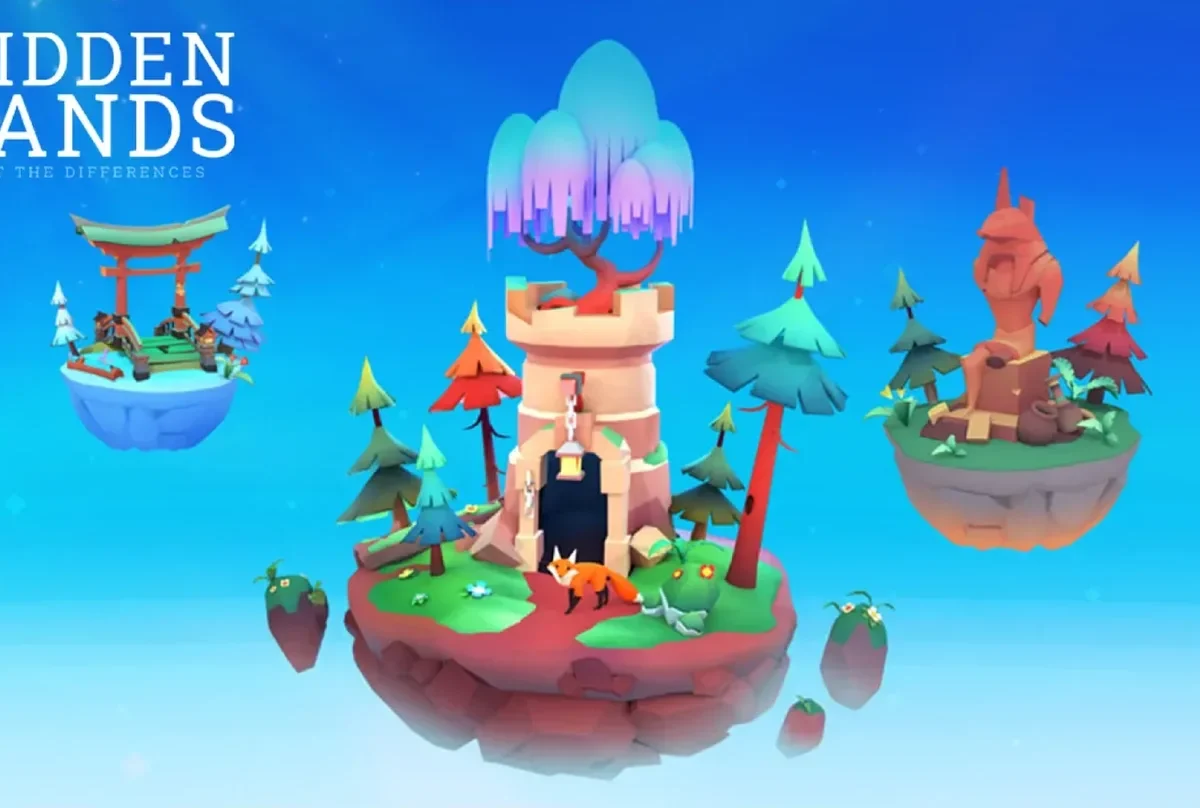
Hidden Lands is the scale entry: sweeping landscape pairs where the changes are worked into hills, rivers and skies rather than into a tidy room of objects. With no clutter to anchor your sweep, the difference could be anywhere in a horizon-wide view, and the grid habit — comparing strip by strip — stops being optional.
Halloween Differences is the low-light entry: dim, candlelit scenes of graveyards and haunted windows where the gloom itself is the difficulty. Edits hide in shadow, and a change of colour reads as a change of darkness — the game rewards players who sweep the murky corners other scenes let you skim.
Spot the Difference Animals is the texture entry: wildlife photography instead of drawings. Fur, feathers and foliage are all gradient and pattern, so the clean-outline shortcuts of cartoon scenes stop working and you are matching real-world detail against real-world detail.
Detective Loupe Puzzle is the fine-detail entry: case photos staged to be read like evidence, with a magnifier as the central prop. The differences run small and deliberate, and the game openly expects the slow, systematic inspection its detective framing implies.
How to Survive the Hard Ones
The techniques from the spot the difference guide carry over, but three matter double here. Sweep on a strict grid, because wide and dark scenes punish wandering eyes hardest. Flick between the twin images at the same fixed point rather than staring — a change often registers as a flicker before you could name it. And rest your eyes deliberately: on photographic and dim scenes fatigue arrives sooner, and a ten-second look away finds differences that ten more seconds of staring will not.
Working Up to Them
If the hard shelf proves humbling, the fix is progression rather than persistence. Find Seven Differences is the ideal warm-up — a fixed count of changes per scene gives each round a clear finish line, and knowing how many remain teaches the systematic habits the harder pictures demand. From there the full comparison collection runs the spectrum, and the four games above are waiting at its far end. Treat them the way climbers treat grades: each one isolates a specific difficulty, so clearing all four means no comparison scene in the genre can surprise you again.
Frequently Asked Questions
What is the hardest spot the difference game here?
It depends on which difficulty you struggle with: Hidden Lands for sheer scale, Halloween Differences for darkness, Spot the Difference Animals for photographic texture, Detective Loupe Puzzle for fine detail.
Why are some spot the difference pictures so difficult?
Four properties: wide scenes that shrink each change, low light that swallows colour shifts, photographic texture that hides seams, and dense fine detail that camouflages small edits. Hard games stack several at once.
Are hard spot the difference games timed?
Difficulty in this genre comes from the pictures, not the clock. Where a timer or penalty appears it is a light layer on top; the games above are hard even with unlimited time.
How do I get better at difficult spot the difference puzzles?
Sweep on a grid instead of wandering, compare the two pictures at the same fixed point in quick alternation, and rest your eyes regularly — fatigue is the main reason a visible difference stays unseen.